

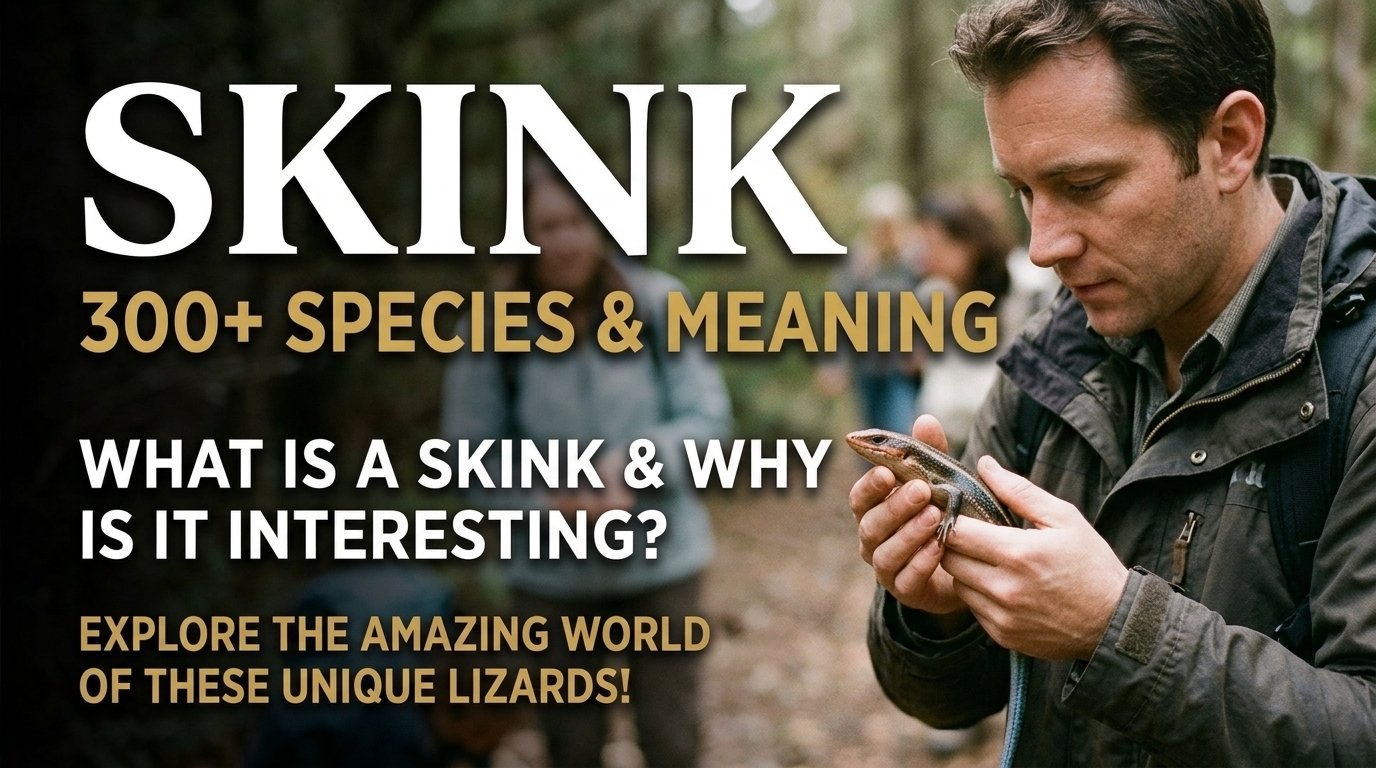
Have you ever heard the word skink and wondered what it means? A skink is a type of small to medium-sized lizard found in many parts of the world. These reptiles are known for their smooth, shiny scales, short legs, and long bodies. Some skinks look a little like snakes because their legs are tiny or difficult to see. However, most skinks have four legs and move quickly across the ground. Understanding the skink meaning helps you learn about this interesting animal, its appearance, its behavior, and the places where it lives.
What Does Skink Mean?
- A skink is a type of lizard.
- It belongs to the reptile family.
- Most skinks have long bodies.
- Their scales often look smooth.
- Many species have short legs.
- Some skinks have very tiny limbs.
- They usually move close to the ground.
- Different species have different colors.
- Skinks are not the same as snakes.
What Does a Skink Look Like?
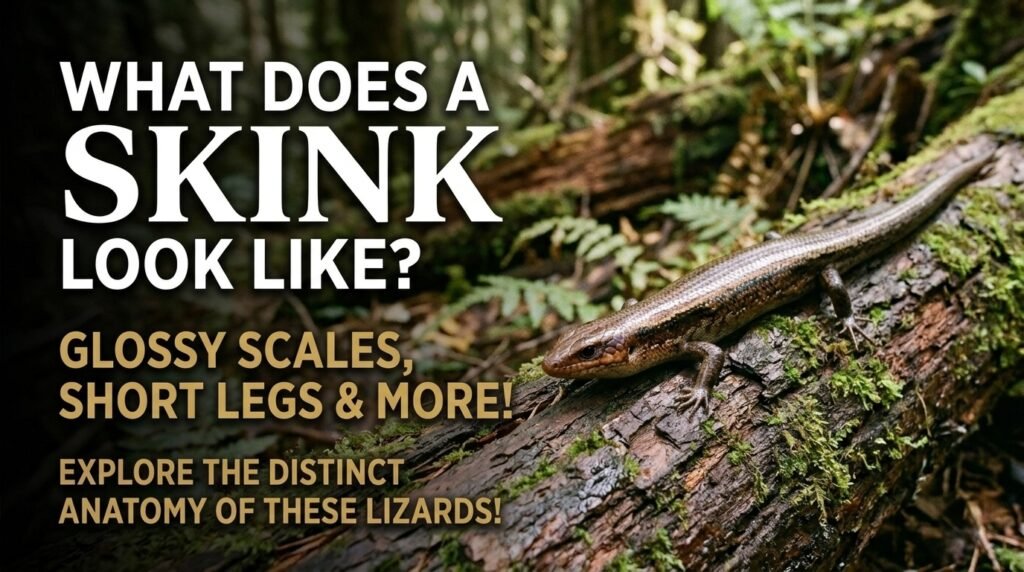
- Skinks usually have long, narrow bodies.
- Their skin is covered with shiny scales.
- Many species have short, strong legs.
- Some skinks have bright blue tongues.
- Their tails can be quite long.
- Body colors include brown, black, and gray.
- Some species have colorful stripes.
- Their eyes help them notice movement.
- Their appearance changes between different species.
Where Do Skinks Live?
- Skinks live in many warm regions.
- They are found in forests and grasslands.
- Some species live in deserts.
- Others hide beneath rocks and leaves.
- Many skinks enjoy sunny places.
- Some species live around gardens.
- Certain skinks are found on islands.
- They often hide inside small spaces.
- Their habitat depends on their species.
What Do Skinks Eat?
- Many skinks eat small insects.
- Ants are common food for some species.
- They may eat beetles and spiders.
- Some species enjoy small worms.
- Certain skinks eat snails and slugs.
- Larger species may eat small animals.
- Some skinks also eat fruit.
- A few species enjoy plant material.
- Their diet depends on their environment.
Are Skinks Dangerous to Humans?
- Most skinks are harmless to people.
- They usually prefer hiding or running away.
- Skinks do not normally chase humans.
- Many species avoid close contact.
- They may bite when handled roughly.
- Their small teeth can cause minor injuries.
- Wild skinks should not be handled unnecessarily.
- Always wash your hands after contact.
- Give these little reptiles plenty of space.
Why Do Skinks Have Long Tails?
- A skink’s tail helps maintain balance.
- It can support movement across uneven ground.
- Some species store fat in their tails.
- The tail may distract a hungry predator.
- Certain skinks can lose their tails.
- This ability helps them escape danger.
- A lost tail may grow back partially.
- Regrown tails can look different.
- Their tails serve several useful purposes.
What Is Special About Skink Skin?
- Skinks have protective outer scales.
- Their skin helps reduce water loss.
- Smooth scales give many species a shiny appearance.
- Different species display different patterns.
- Some have dark stripes along their backs.
- Others have colorful spots on their bodies.
- Their scales offer protection from rough surfaces.
- Skin color may help with camouflage.
- Their appearance helps scientists identify species.
Are Skinks the Same as Snakes?
- Skinks and snakes are both reptiles.
- However, they belong to different groups.
- Most skinks have four small legs.
- Snakes do not have external limbs.
- Skinks usually have visible eyelids.
- Most snakes lack movable eyelids.
- Many skinks have external ear openings.
- Snakes generally lack visible external ears.
- Some skinks resemble snakes because of their bodies.
Can Skinks Live in Gardens?

- Many skinks can live in gardens.
- They often hide beneath stones and leaves.
- Garden plants provide helpful hiding places.
- Some species eat insects around homes.
- Fallen branches can offer safe shelter.
- Small cracks may become hiding spots.
- Avoid using harmful garden chemicals.
- Keep pets away from wild skinks.
- A natural garden can support local wildlife.
How Do Skinks Protect Themselves?
- Skinks often escape by running quickly.
- Their colors can help them hide.
- Some species squeeze into narrow spaces.
- Rocks provide protection from hungry predators.
- Leaves can conceal their bodies.
- Certain skinks drop their tails when threatened.
- Some species display warning colors.
- Staying still can help avoid detection.
- Their defense methods vary by species.
Are Skinks Good Pets?
- Some skink species are kept as pets.
- Popular species include blue-tongued skinks.
- Pet skinks need suitable living spaces.
- Their enclosure must provide proper temperatures.
- Clean water should always be available.
- Their diet must match their species.
- Some skinks need special lighting.
- Owners should research care before buying.
- Wild skinks should remain in their natural habitats.
Interesting Facts About Skinks
- Skinks belong to a large lizard group.
- Thousands of skink species have been described.
- Some species have unusually bright tongues.
- Certain skinks have very short legs.
- Others have limbs that are almost invisible.
- Many skinks are active during daylight.
- Some species prefer hiding underground.
- Their tails can help them escape predators.
- Skinks show remarkable variety in size and color.
Skink Meaning in Everyday Language

- Skink usually refers to a type of lizard.
- It is mainly used as an animal name.
- The word appears in nature books.
- Wildlife websites often explain skink species.
- Teachers may use it during reptile lessons.
- Children may learn about skinks in science.
- The word can appear in animal documentaries.
- Its meaning depends on the sentence.
- In most cases, skink means a lizard.
What Is the Difference Between a Skink and a Gecko?
- Skinks and geckos are both types of lizards.
- Many skinks have smooth, shiny scales.
- Geckos often have soft-looking skin.
- Some geckos have sticky toe pads.
- These pads help them climb smooth surfaces.
- Most skinks lack similar climbing pads.
- Geckos often make sounds to communicate.
- Many skinks are quieter and less vocal.
- Their features vary across different species.
FAQs
1. What is the meaning of skink?
A skink is a type of lizard with a long body, smooth scales, and usually four short legs.
2. Is a skink a snake?
No, a skink is a lizard. Although some species look like snakes, most have four legs and other features that distinguish them from snakes.
3. Are skinks poisonous?
Most skinks are not poisonous to humans. They are generally harmless and prefer to escape rather than interact with people.
4. What do skinks eat?
Most skinks eat insects, spiders, and other small animals. Some species also eat fruit, plants, or other food sources.
5. Can skinks live inside a house?
Skinks can sometimes enter houses through small gaps. They may be searching for insects or shelter, but they usually prefer suitable outdoor habitats.
Conclusion
The word skink refers to an interesting type of lizard found in many different environments. Skinks are known for their smooth scales, long bodies, and ability to hide from predators. Some species have colorful tongues, while others have tiny legs or unusual patterns. Most are harmless to humans and play a useful role in nature. Learning the skink meaning helps you recognize these reptiles and understand why protecting their natural habitats matters.
